FAQ
GeneralProduct
Technology
Heating, Ventilation, Air conditioning (HVAC)
Occupational Health (OH)
General
What are (airborne) ultra-fine particles?What are sources of ultra-fine particles?
What are health effects of ultra-fine particles?
Why are ultra-fine particles so health hazardous?
Is there standardization on ultra-fine particles?
Can you give me some reference values of fine particle concentrations?
What are (airborne) ultra-fine particles?
Although we can’t see them, the air we breathe is full of microscopic particles. These particles are usually health hazardous and are thus considered as a specific type of air pollution. The size of these particles is in the order of several nanometers (one millionth of a millimeter) to several micrometers (one thousandth of a millimeter). In recent years, scientists have investigated the relation of particle size and health effects. They are finding convincing results indicating that ultra-fine particles (in the range around one hundred nanometer) play a special role and are potentially more health hazardous than the coarse particles.
What are sources of ultra-fine particles?
Airborne particles originate from many natural and man-made sources (e.g. sand dust, fires, diesel smoke, sea salt). Ultra-fine particles are only generated at very high temperatures, such as combustion processes. One can think of wood fires, car engines, industry, cooking fumes and cigarette smoke.
What are health effects of ultra-fine particles?
Health effects can be divided in short term and long-term effects. Long-term effects are lung diseases, but also increased risk of heart and brain problems. Short-term effects are increased mortality and morbidity. Especially children, elderly people and people with lung problems like asthma are vulnerable to ultra-fine particle air pollution.
Why are ultra-fine particles so health hazardous?
This question is still the subject of ongoing scientific research. Some possible explanations have been suggested. One is that ultra-fine particles penetrate and deposit deeper in the lungs than coarser particles. About 50% of the particles around 20 nm deposits deep in the lungs. Another explanation is that the concentration of ultra-fine particles is generally much higher than the concentration of coarser particles. The lungs cannot deal with the high amounts of particles that deposit in the lung sacs, which leads to inflammation. A third possible explanation is that the size of the particles is such that they can enter the cells in the human body and can end up in the blood stream causing heart and brain diseases.
Is there standardization on ultra-fine particles?
Can you give me some reference values of fine particle concentrations?
There is no standardization on ultra-fine particles at the moment. However, scientific discussions are ongoing on the formation of a standard. Nevertheless, it is possible to give some reference concentrations (Ultra-fine particles are measured in concentrations particles/cm3)
| Clean air in the alps | < 1.000 |
| Clean office air | 2.000 – 4.000 |
| Outside Air in urban area | 10.000 – 20.000 |
| Polluted outside air (smog) | > 50.000 |
| Cigarette smoke | > 50.000 |
| Workplaces (like welding) | 100.000 – 1.000.00 |
Note that it is expected that there is no threshold concentration below which there is no negative health effect. Air should be as clean as practically possible. The threshold concentration at which people feel immediate impact is around 50.000 particles/cm3. Asthmatic people immediately feel the effect of smog.
Product
What product versions will be available and what will be the purpose of these versions?What product versions will be available and what will be the purpose of these versions?
Philips is currently developing several solutions based on the Aerasense technology. In due time Philips will make further announcements.
Technology
How does the technology work?Can Aerasense detect pollen?
How accurate is the technology?
If I measure high ultra-fine particle concentration, what can I do about this? Does Philips also offer a solution to clean the air?
What will be the price of the products?
Where can I buy the product?
Is Aerasense part of Philips?
Where can I get more information?
How does the technology work?
We currently do not disclose details on the technology.
Can Aerasense detect pollen?
Aerasense cannot detect pollen in the air.
How accurate is the technology?
The technology is very accurate as each individual unit is calibrated against scientific measurement systems.
If I measure high ultra-fine particle concentration, what can I do about this? Does Philips also offer a solution to clean the air?
Depending on the situation it can also be necessary to apply better filters in a building ventilation system, better ventilation or a better exhaust system. In general we recommend consulting an indoor air specialist or occupational hygienist to find an optimum solution.
What will be the price of the products?
By the time of release details about pricing will be announced.
Where can I buy the product?
Philips is interested in end-user application beta-testing.
Interested parties can contact us the contact function of this site.
Is Aerasense part of Philips?
Aerasense was started in Philips Research and is still part of the sector Innovation & Emerging Businesses. Aerasense is fully owned by Philips
Where can I get more information?
Professionals from the industry, business, government and science are welcome to show their interest via the contact function of this site.
Heating, Ventilation, Air conditioning (HVAC)
Why is it of interest to measure the ultra-fine particle concentration in a building?Why is the ultra-fine particle concentration indoors or outdoors not constant?
What is the relation between the indoor and outdoor ultra-fine particle concentration?
Why is it of interest to measure the ultra-fine particle concentration in a building?
People spend on average more than 80% of their time indoors. In a good indoor environment people feel better and perform better. Therefore it is logical to optimize the indoor air quality. While monitoring temperature, relative humidity and CO2 levels is common practice currently, it will soon become possible to easily monitor ultra-fine particle concentrations.
Why is the ultra-fine particle concentration indoors or outdoors not constant?
The ultra-fine particle concentration outdoors depends on many factors: e.g. the amount of traffic, the occurrence of other ultra-fine particle sources, the wind and weather conditions. Indoor quality is dependent on the connection with outdoor, air treatment systems filtering quality and indoor ultra-fine particle sources.
What is the relation between the indoor and outdoor ultra-fine particle concentration?
The ventilation of buildings and the indoor sources determine the relation between indoor and outdoor concentrations. In older, naturally ventilated buildings, ultra-fine particles penetrate very easily. In modern, mechanically ventilated buildings, the quality of the air filters determines the intake of ultra-fine particles. Average filters only have an efficiency of up to 40% for ultra-fine particles. Furthermore, indoor sources like kitchens, smoking rooms, laser printers, copiers should not be neglected.
Occupational Health (OH)
Why do we need to measure at work places?Can you give me examples of workplaces with high concentration levels?
Is there a government discussion or regulation regarding workplace exposure?
Why do we need to measure at work places?
At many industrial workplaces ultra-fine particles are generated. Inhalation of these particles can have serious effect on the human health. Therefore it is needed that ultra-fine particle concentrations at the workplace are monitored and controlled. A lot is still unknown about the generation and behavior of ultra-fine particles. Academia, industries and governments are working hard to collect experimental data in order to develop control strategies and legislation.
Can you give me examples of workplaces with high concentration levels?
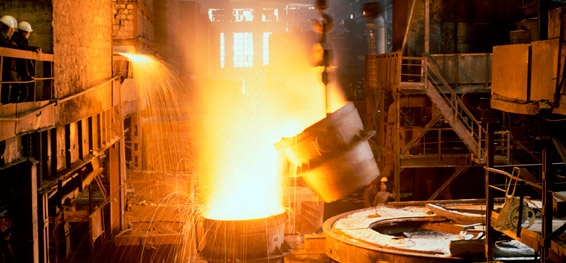
Workplaces with potentially high concentrations are typically found at roadsides, at airport platforms, in engineered nano-particle production sites, in bakeries and in the metalworking industry (welding, cutting, melting, soldering). As an example, BGIA an institute for research and testing of the German Berufsgenossenschaften (guilds), the institutions for statutory accident insurance and prevention in Germany has described potential high exposure workplaces in a report (click here).
Is there a government discussion or regulation regarding workplace exposure?
Please consult the European Commission (www.nanosafe.org) , OECD, USA NIOSH or BGIA.